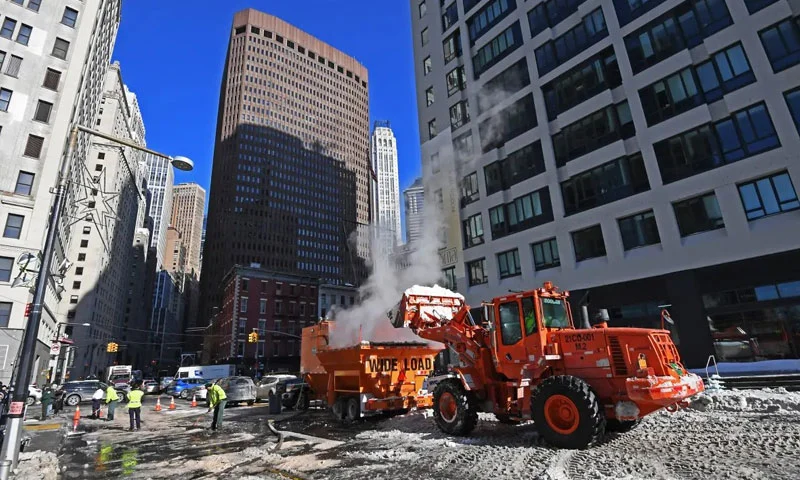
New York City has rolled out massive snow-melting machines — nicknamed “hot tubs” — to tackle towering piles of snow left by a powerful January blizzard that dropped more than a foot in parts of the city. With temperatures plummeting well below freezing and no natural melt in sight, city officials turned to these industrial snow melters to help clear streets, sidewalks and bus stops across the five boroughs.
The machines were activated after a winter storm delivered widespread snowfall, including nearly 15 inches in Washington Heights and over 11 inches in Central Park. This was the first deployment of all eight melters since 2021, highlighting the severity of the storm and the challenges faced by sanitation crews.
What the “Hot Tubs” Are and How They Work
Contrary to what the name might suggest, these “hot tubs” are giant industrial snow-melting units operated by the New York City Department of Sanitation (DSNY) that use heat to turn snow into water quickly and efficiently. Acting DSNY Commissioner Javier Lojan explained that the tubs sit at around 38 degrees Fahrenheit, warm enough to melt snow while still controlling the water flow.
Dump trucks and front loaders haul snow from collection points throughout the boroughs — including Lower Manhattan, East New York, Red Hook and Queensboro Hill — and deposit it into the melters. The resulting meltwater flows into the city’s sewer system under permission from the Department of Environmental Protection.
Each machine can melt between 60 to 120 tons of snow per hour, though sanitation officials caution that keeping up with the enormous volume will take time. With snow still piled high in many neighborhoods and more snow forecasted, the operation will likely continue for several weeks.
Why NYC Needs the Snow Melters
In a typical winter, rising temperatures help melt snowfall gradually. But this storm was followed by days of temperatures in the teens and single digits — the coldest stretch in years — leaving snow and ice stubbornly in place and turning sidewalks and intersections hazardous. Residents reported slippery conditions at crosswalks and bus stops, prompting public complaints and legislative concern.
Queens State Assemblywoman Jenifer Rajkumar noted that residents were frustrated by snow-clogged walkways and transit stops. “I had parents telling me about children slipping and falling. Bus stops buried in snow,” she said.
Mayor Zohran Mamdani said city agencies have worked around the clock to clear critical areas. “One thing that has complicated their work has been the fact that this snowstorm has been followed by the kind of cold the city has not seen in at least eight years,” he said.
Challenges and Outlook
Despite the capabilities of the melters, they are not a cure-all. Clearing snow from side streets and narrow sidewalks remains difficult without disrupting traffic. DSNY officials say plowing, salting and emergency shovel teams remain essential parts of the cleanup operation.
With additional snow in the forecast, maintenance crews are preparing for an extended winter battle. But for now, New Yorkers are watching the giant tubs heat up city blocks and slowly but visibly reduce the snowy burden — a rare sight in the heart of one of the world’s busiest cities.