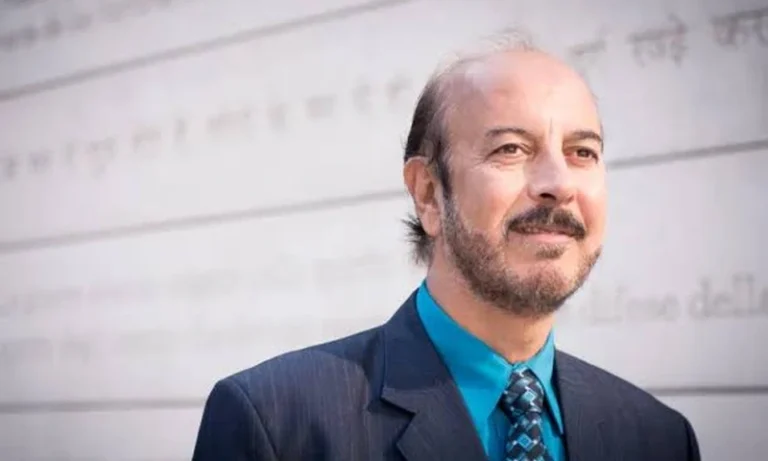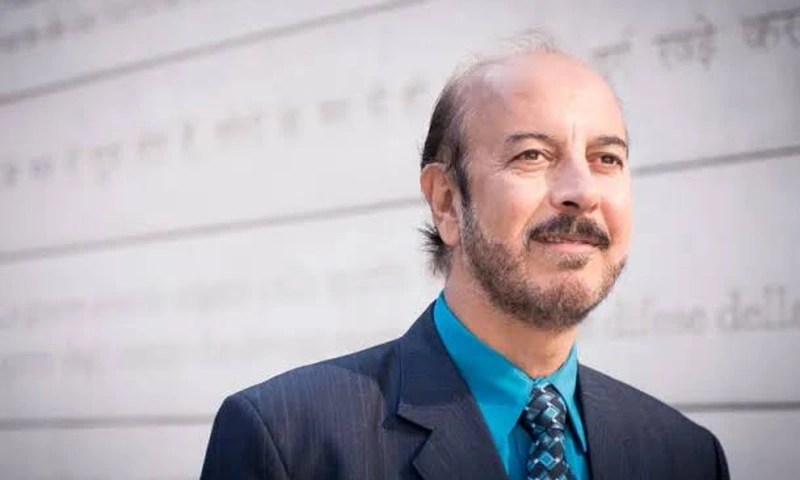
Professor Dr Zabta Khan Shinwari, vice chancellor of the Federal Urdu University, has earned another place among the world’s top 2% scientists.
The latest recognition marks his seventh inclusion, according to an Associated Press of Pakistan report dated October 11. The list, released on October 7, recognises his research in botany and plant biology.
Shinwari holds Pakistan’s Sitara-e-Imtiaz and Tamgha-e-Imtiaz civilian honours. APP reported that he previously appeared on the list for six consecutive years, from 2018 to 2023.
His research record includes around 700 papers in international journals and more than 27,000 citations by other researchers, the agency said.
Recognition reflects research impact
The October 7 release of the Stanford-linked citation database appears in the Elsevier Data Repository. Stanford researcher John P.A. Ioannidis is its listed contributor.
The database uses Scopus records to assess researchers through several measures, including citations, the h-index and a composite citation score.
It provides separate assessments of career-long influence and impact during a single recent year. The 2026 update covers career citations through the end of 2025 and annual citations received during 2025.
Read More: Why Google’s Chief Scientist Jeff Dean Left After 27 Years
Its selection criteria include the top 100,000 researchers by composite score or those within the top 2% of their scientific subfield.
The composite score considers co-authorship and author positions, alongside citation impact. It does not simply reward researchers for publishing large numbers of papers.
The database’s authors also caution against treating inclusion as absolute proof of scientific excellence. Citation indicators measure particular aspects of research influence and carry limitations.
Career spans plant science and biotechnology
Shinwari comes from Kohat and obtained his doctorate from Kyoto University in Japan, according to the International Science Council. He subsequently completed several postdoctoral fellowships there.
His research interests extend across molecular systematics, biotechnology and bioethics. The World Academy of Sciences also lists agricultural biotechnology, medicinal plant ecology, biosafety and sustainable development among his areas of work.
Before taking senior university roles, he worked with the Pakistan Museum of Natural History and the National Agricultural Research Centre. His career also included positions at WWF-Pakistan and COMSTECH.
He previously served as professor and chairman of biotechnology at Quaid-i-Azam University in Islamabad.
Earlier honours include UNESCO ethics prize
Shinwari’s international recognition also includes the 2015 UNESCO Avicenna Prize for Ethics in Science.
UNESCO has described him as a specialist in modern plant biotechnology and ethnobotany, which examines relationships between communities and plants.
Read More: Scientists Use AI to Decode Bird Language in Major Breakthrough
His academic leadership includes service at Kohat University of Science and Technology and Qarshi University in Lahore.
The International Science Council credits him with founding the University of Science and Technology, Bannu, and the KUST Institute of Medical Sciences. It also highlights his efforts to widen higher education access, particularly for women in underserved communities.
The latest listing adds a citation-based distinction to a career combining plant research, university leadership and advocacy for responsible science.