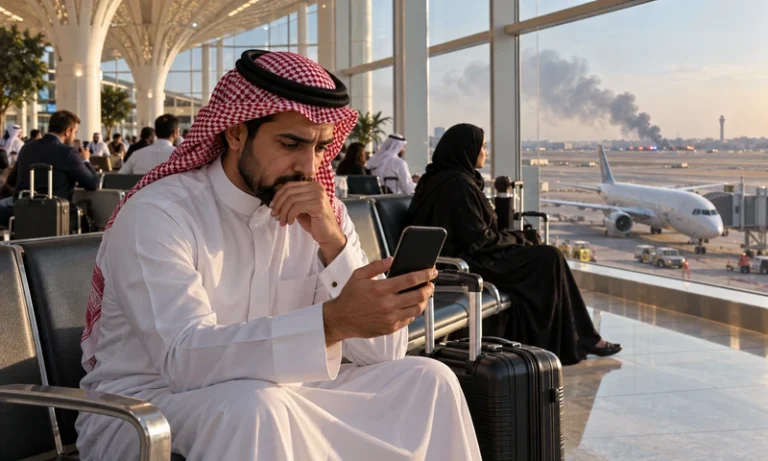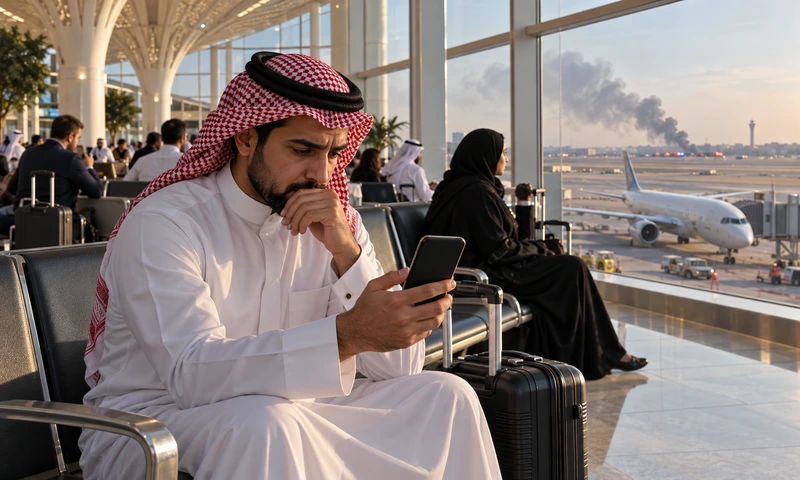
Saudi Arabia stopped issuing public attack warnings before four strikes on Riyadh airport killed at least 18 people and wounded over 300.
Civil defence resumed alerts on Monday, October 12, warning of threats in Riyadh and southern cities. Its previous alert, on September 29, concerned Najran.
Saudi authorities have not explained the silence. Civil defence and the government media office did not answer Reuters’ questions. Reuters could not establish whether the airport attacks prompted the resumption.
Officials questioned missing alerts
Saudi Arabia introduced mobile-phone and social-media threat alerts in May. Weather warnings continued during the gap in military alerts.
Two Western officials said Saudi authorities attributed the suspension to disruption and complaints about alerts waking citizens at night. Saudi officials did not respond to that account.
Sultan Alamer, a US-based Saudi academic at the Middle East Policy Council, said:
“They (the Saudi government) want to have it both ways: to launch a military operation and at the same time try to give confidence to the population and external stakeholders,”
Former US ambassador Michael Ratney said:
“Their approach to public messaging seems like a corollary to the quandary they are in: They need to respond to the Houthis but don’t want that to result in societal disruption and their public messaging is a reflection of that,”
“But the lack of alerts of incoming Houthi attacks creates the very nervousness they are trying to avoid.”
Embassies sent separate warnings
Two Western officials said Riyadh had faced about a dozen attacks this month. Western embassies issued internal warnings using Western intelligence and Saudi input, according to Reuters.
Staff received alerts around the first two airport strikes. However, even embassies received no warning before Saturday’s deadliest attack. Reuters could not determine why.
Saudi state television subsequently showed travellers waiting inside the terminal before an orange explosion flashed.
Authorities also warned against sharing interception images, impact-site information or rumours under March regulations. Reuters could not establish whether anyone had faced prosecution.
Meanwhile, authorities extended Riyadh airport’s closure until Saturday, October 17, according to a separate Reuters report.
Air defence gaps raise concerns
Saudi analyst Ali Shihabi highlighted the challenge of protecting the kingdom’s infrastructure.
“In Saudi Arabia you have too much to protect. It’s a huge country with airports, pipelines and oil facilities. There is just not enough coverage to defend everything at once, not enough Patriots (missile defence systems), interceptors and missile batteries to do it all,” he said.
“Saudi Arabia has an unlimited need for air defences,” he added.
Despite the attacks, Riyadh hosted the World Petroleum Council Energy Congress on Monday, although major oil executives withdrew.
Energy Minister Prince Abdulaziz bin Salman thanked visitors “because you know this country is safe” but acknowledged continuing danger.
“Our gathering here does not mean the risk is gone.”
“We will never forfeit any chance to maintain our commitment and our vision,” he said.