An 18-year-old student in eastern China temporarily lost part of his hearing after spending four hours surrounded by loud cicada calls during a camping trip.
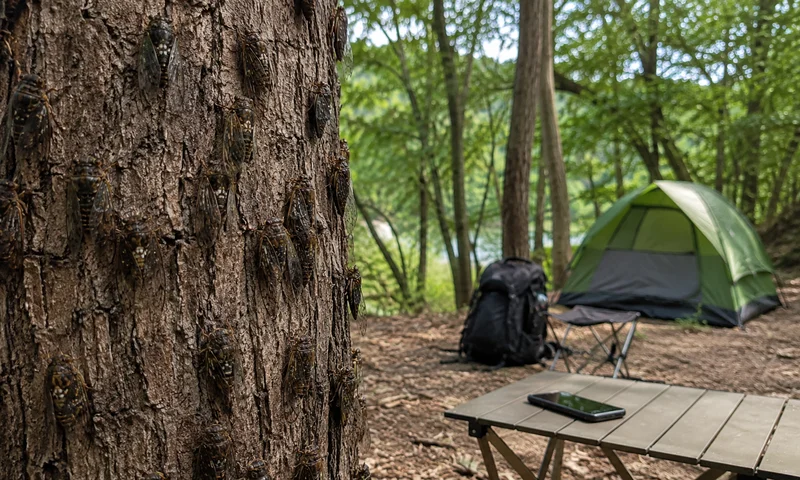
The teenager, identified by local media by the surname Yang, was camping in a forest in Ningbo, Zhejiang province, in early July. Around noon, the cicadas became particularly loud, but he remained in the area for about four hours without hearing protection.
By evening, Yang noticed ringing in his ears and a feeling of fullness. He then realised he could no longer clearly hear high-pitched sounds, including birds singing and notification alerts from his mobile phone.
Hearing returned after two weeks
Worried that the damage could become permanent, the teenager sought medical treatment. Doctors found swelling in both ears and diagnosed temporary hearing impairment linked to noise exposure.
He received medication and instructions to stay away from loud environments. His hearing returned to normal after 14 days of treatment and rest.
“Many people mistakenly think that the sounds of nature are harmless to the ears,” Li Ji, a senior doctor in the otorhinolaryngology department of Ningbo University No 1 Affiliated Hospital, said.
Why a chorus of cicadas can become risky
A single cicada may produce sound at around 70 decibels. However, a large chorus can exceed 85 decibels, depending on the species, distance and number of insects.
Noise risk depends on both volume and exposure time. The US National Institute for Occupational Safety and Health recommends an occupational exposure limit of 85 dBA averaged over eight hours.
The World Health Organization also warns that safe listening time falls quickly as sound levels rise. For example, WHO says adults can safely listen to 80 dB for up to 40 hours a week. At 90 dB, that falls to about four hours.
Li explained how loud sound can temporarily affect the inner ear.
Read More: Paris Hospitals to Receive 1,000 Air Conditioners as France Prepares for Another Heatwave
“The hair cells in the cochlea can develop oedema due to the irritation from loud noises for a relatively short duration. They typically recover after avoiding the noisy environment and resting for 1-2 weeks,” he said.
“However, if the hair cells become necrotic, they cannot regenerate. The resulting hearing impairment is permanent and irreversible, forcing the patient to rely on hearing aids for auditory assistance.”
Doctors warn natural sounds are not always harmless
Cicadas are known for their intense summer calls, especially when large numbers gather in trees. The Ningbo case shows that prolonged exposure to a loud natural environment can still affect hearing.
Doctors advise people to move away from unusually loud environments if they develop ringing, muffled hearing, pressure or fullness in their ears. Persistent or sudden hearing changes should receive medical attention.
The teenager’s full recovery after two weeks indicates that his hearing problem was temporary. However, experts warn that repeated or more intense noise exposure can increase the risk of lasting damage.
For campers and hikers, the case offers a simple lesson: natural surroundings may feel peaceful, but sound intensity still matters.