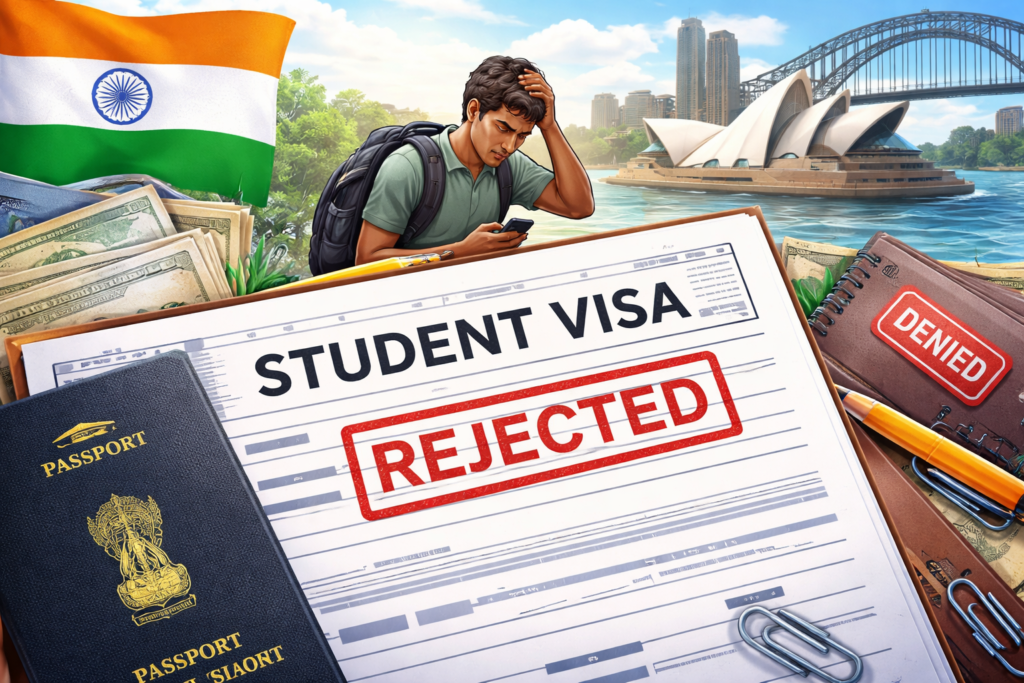
Australia has taken a headline-grabbing step in early 2026 by tightening its student-visa rules for India and three of its neighbours. From January 8, 2026, the Australian Department of Home Affairs moved India, Nepal, Bangladesh and Bhutan from Evidence Level 2 to the highest risk category (Evidence Level 3) in its Simplified Student Visa Framework (SSVF). The government said the change responds to “emerging integrity risks” including fraud and forged documentation.
Under this Level-3 rating, applicants must submit more detailed evidence of finances, verified academic transcripts and genuine study intent. Bank statements must often span months, police clearances may be required, and visa officers can directly contact educational institutions for confirmation. Agents warn that processing times could stretch from three weeks to six–eight weeks or longer.
The official rationale focuses on maintaining the credibility of Australia’s student-visa system. A government statement said the change will help manage risks while continuing to support “genuine students seeking a quality education.” Industry bodies, however, say the move is unusual because evidence levels are typically reviewed only every two years.
This shift matters because Indian students accounted for a large share of Australia’s international student population in 2025. India alone hosted nearly 140,000 students, making it one of the top source countries. With the new rules, Indian applicants now face extra document checks, manual financial verifications, and possible interviews—barriers that could slow approvals and increase rejections.
Education consultants warn that families need to plan ahead. Detailed bank statements, verified degree records and strong evidence of English proficiency are now essential. Some students may end up choosing alternative destinations if processing time or cost rises too high.
The tighter regime also reflects broader concerns about visa misuse and “ghost college” scams in Australia, where some private providers enroll students more for work rights than education. These scams contributed to past visa reforms and higher rejection rates for fraudulent cases.
For now, genuine applicants must prepare for a tougher process. Universities and recruitment agents have begun issuing advisories on documentation and timing. The overall goal remains intact: preserve the integrity of Australia’s global education market while protecting the rights of bona fide students.