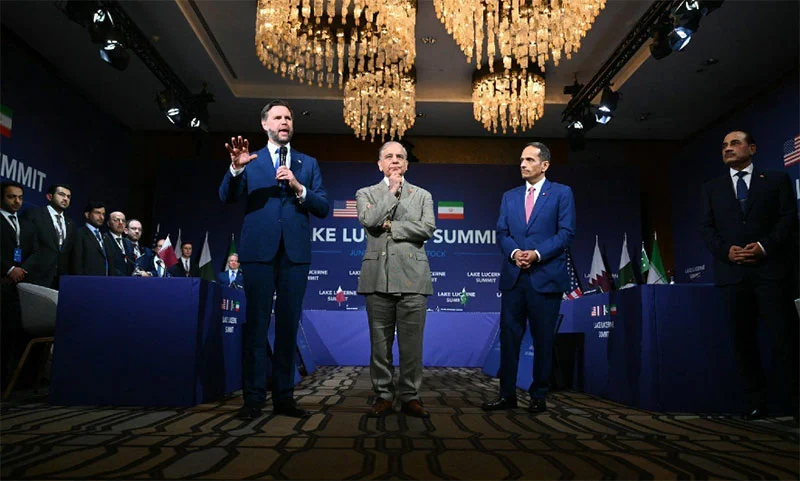
High-level talks between the United States and Iran in the Swiss resort of Bürgenstock concluded on Monday with what mediators Pakistan and Qatar described as “encouraging progress”, including agreement on a roadmap aimed at securing a final peace deal within 60 days.
The negotiations took place under the framework of the Islamabad Memorandum of Understanding (MoU), signed last week by US President Donald Trump and Iranian President Masoud Pezeshkian. The agreement seeks to end months of conflict that has rattled the Middle East, disrupted shipping routes and pushed global oil prices higher.
In a joint statement, the foreign ministries of Pakistan and Qatar said the first session of high-level talks under the Islamabad MoU ended in a “positive and constructive atmosphere”.
“The Lake Lucerne Summit was conducted in a positive and constructive atmosphere,” the statement said. “Encouraging progress has been made including the creation of a mechanism for further technical talks.”
Delegations from the US, Iran, Pakistan and Qatar attended the negotiations. Pakistan Prime Minister Shehbaz Sharif and Chief of Defence Forces Field Marshal Syed Asim Munir represented Pakistan during the talks.
High-Level Committee Formed as Technical Talks Continue
The joint statement said all parties agreed to establish a “High Level Committee” that will oversee the mediation process and provide political direction.
It added that chief negotiators would regularly report to the committee while leading working groups on nuclear issues, sanctions and dispute resolution.
“The High Level Committee has agreed upon a roadmap toward reaching a final deal within 60 days, laying the foundation for the immediate commencement of further technical talks,” the statement said.
The mediators also announced the creation of a direct communication line between the parties. Officials said the channel would help prevent misunderstandings and ensure safe passage for commercial vessels through the Strait of Hormuz.
The strategic waterway handles a significant share of global oil shipments and has remained at the centre of tensions since the conflict began.
Technical discussions will continue throughout the week at the Bürgenstock resort.
“Technical talks will continue for the remainder of the week at the Bürgenstock resort on all issues,” the statement added.
The mediators said they would continue efforts to ensure negotiations remain constructive and focused on securing a lasting settlement.
Lebanon Remains Key Challenge
Despite progress, Lebanon remains one of the most difficult issues facing negotiators.
Iran has repeatedly argued that a ceasefire in Lebanon is essential for any broader peace agreement. Fighting between Israel and the Iranian-backed Hezbollah movement continues despite diplomatic efforts.
According to Lebanese authorities, Israeli strikes killed 16 people and wounded 12 others in Nabatieh district on Saturday.
To address the issue, the parties agreed to establish a “de-confliction cell” involving Lebanon and facilitated by Pakistan and Qatar.
The mechanism aims to ensure compliance with the termination of military operations outlined in the Islamabad MoU.
Iranian Foreign Minister Seyed Abbas Araghchi described the talks as a significant breakthrough.
“Tireless Pakistani and Qatari mediation has delivered major progress to end the Lebanon war,” Araghchi wrote on X.
“Oil and petrochemical exports are waived, blockade lifted, some frozen assets released and major reconstruction & development plan launched for Iran.”
“1st real test: Lebanon deconfliction cell.”
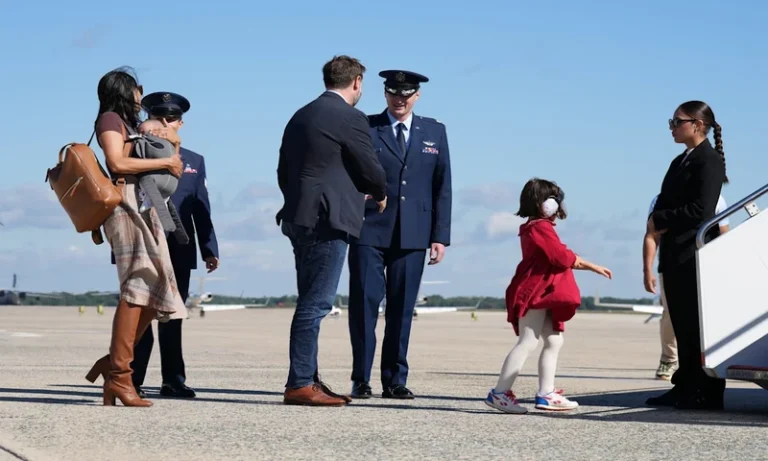
US Vice President JD Vance, who led the American delegation, said diplomacy offered an opportunity to reshape relations.
“What today really represents is the beginning of a technical negotiation that’s not going to solve every disagreement, but is going to allow us to sit together as teams, for the first time really in history, to figure out what matters most to the respective parties, to settle those issues, to solve those issues, and get to a better tomorrow,” he said.
Vance added that “peace requires give and take” and stressed that the Trump administration remained committed to a broader regional ceasefire.
Trump Threat, Strait of Hormuz Tensions and Regional Stakes
The talks took place amid renewed tensions. Hours before negotiations began, Trump warned Iran on social media against supporting Hezbollah activities in Lebanon.
“Iran must immediately stop their highly paid proxies in Lebanon from causing trouble. If they don’t, we’ll hit Iran very hard again, just like we did last week, only harder!!!” he wrote.
Tensions also resurfaced over the Strait of Hormuz.
Iran said on Saturday that it had again closed the route because of Israeli ceasefire violations in Lebanon. US officials disputed that claim, although commercial shipping data showed immediate market disruption.
Prime Minister Shehbaz Sharif expressed optimism about the negotiations and praised all parties involved.
“We agreed that the next phase of negotiations must continue to be guided by a firm commitment to dialogue, diplomacy, and vigilance against any attempt to undermine the peace process,” he wrote on X after speaking with Saudi Crown Prince Mohammed bin Salman.
Sharif also praised the Iranian delegation’s approach and expressed hope for stronger regional cooperation.
The Islamabad MoU outlines a framework for ending the conflict, reopening the Strait of Hormuz and advancing negotiations on Iran’s nuclear programme. It also envisions a future reconstruction package worth up to $300 billion once a comprehensive agreement is reached.
While major differences remain, Monday’s talks produced the clearest sign yet that Washington and Tehran may be moving toward a broader settlement after months of confrontation.