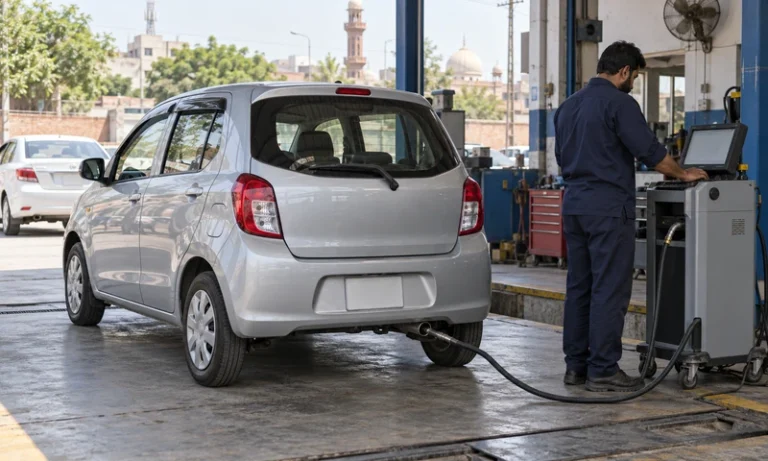


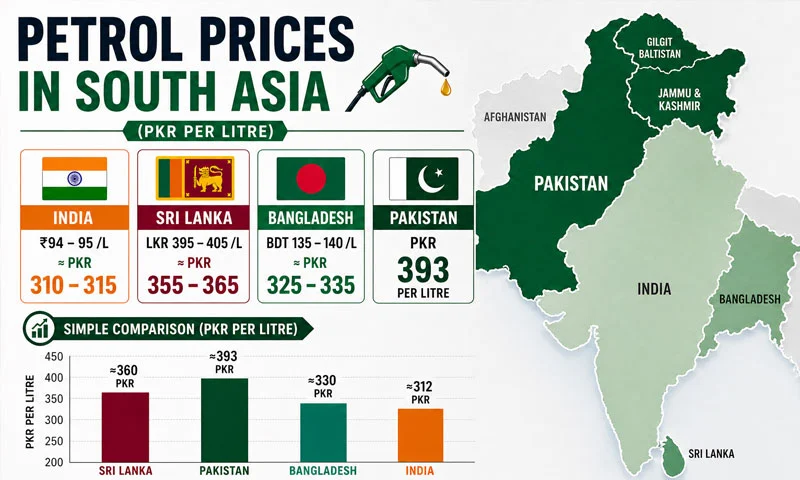
While petrol prices in Pakistan remain broadly in line with regional averages in dollar terms, the World Bank’s latest assessments highlight that low income levels are turning fuel into a disproportionately heavy expense for households.
Read More: Rs378 Petrol Explained: How Much Goes to Taxes and Profits
World Bank Warns of Declining Purchasing Power
In its recent economic outlook on Pakistan, the World Bank pointed to declining real incomes and persistent inflation as key drivers behind worsening affordability. The report notes that energy costs, particularly fuel, are placing increased pressure on already strained household budgets.
Analysts say this explains why Pakistan ranks at the bottom in South Asia when petrol prices are adjusted for income. Although the per-litre cost is not the highest in the region, the share of income required to purchase fuel is significantly higher than in neighbouring countries.
The World Bank has also warned that inflationary pressures, driven partly by energy prices, continue to erode purchasing power. This has limited consumers’ ability to absorb essential expenses such as transport and food.
Affordability Gap Widens Across Region
Petrol in Pakistan currently hovers around $1.3 to $1.4 per litre, comparable to regional peers. However, countries like India and Bangladesh benefit from relatively higher average incomes, allowing their citizens to bear fuel costs more easily.
Read More: Punjab Petrol Subsidy: Just Two Steps to Qualify for Relief
By contrast, Pakistan’s lower wage base has widened the affordability gap. Some global comparisons place Pakistan among the worst-performing countries worldwide on this metric, reflecting how income disparities can distort real cost perceptions.
The World Bank has repeatedly stressed that structural economic challenges, including slow income growth and high inflation, are central to this imbalance.
Policy Constraints and Economic Fallout
Pakistan’s dependence on imported fuel has left it exposed to global oil price volatility. Recent spikes linked to geopolitical tensions have forced the government to pass on higher costs to consumers.
At the same time, commitments tied to programmes with the International Monetary Fund have reduced the government’s ability to provide fuel subsidies, further intensifying the burden on households.
Fuel costs also include significant taxation, with petroleum levies forming a large portion of the retail price. Economists say this structure limits the government’s flexibility in easing prices without affecting revenue targets.
The ripple effects are being felt across the economy. Higher petrol and diesel prices are pushing up transport costs, which in turn drive food inflation and increase the cost of essential goods.
Households Feel the Pressure
For many Pakistanis, fuel has become one of the most visible indicators of economic stress. A single litre of petrol now represents a meaningful share of daily income for lower and middle-income households.
Read More: Petrol Price Truth: Nearly Half of Petrol Price Is Taxes and Margins
The World Bank report highlights that such pressures can reduce mobility, limit economic activity, and force households to cut back on other essential spending.
There are also signs of behavioural shifts, with rising interest in fuel-efficient vehicles and alternative transport options as consumers look for ways to cope with sustained high costs.