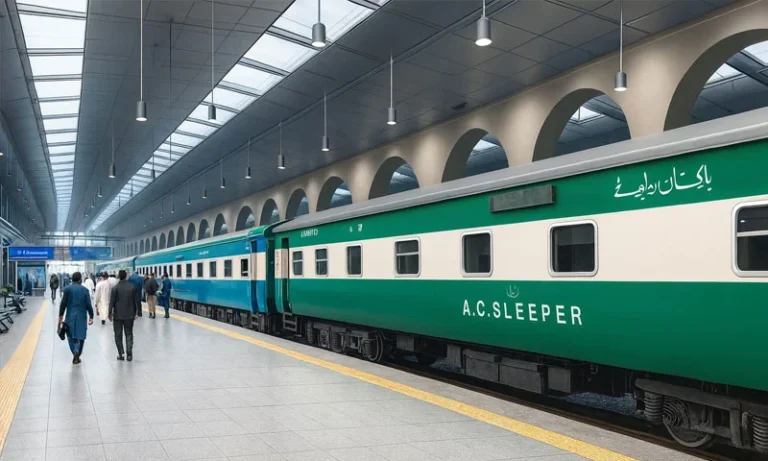
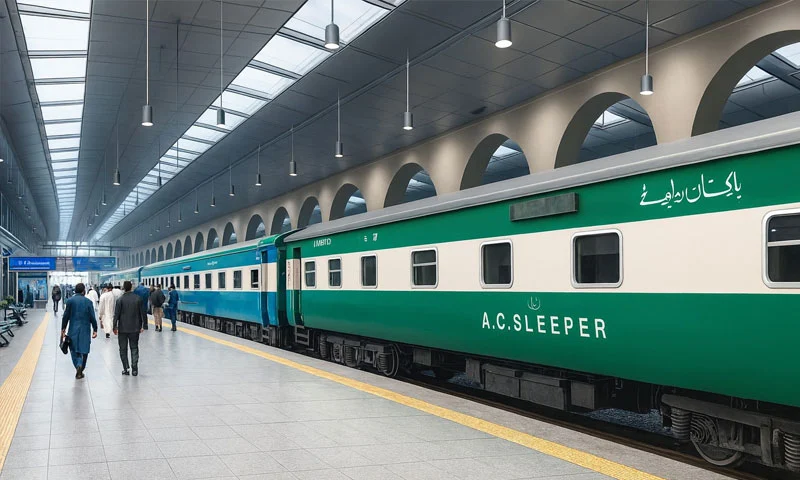
Pakistan Railways declared an emergency on October 24 following repeated accidents, cancelling holidays and most leave until December 31. Railways Minister Hanif Abbasi ordered officers to fix operational deficiencies and strengthen safety across passenger and freight services.
The decision follows the Rehman Baba Express derailment near Multan, which killed five passengers and injured 49. Meanwhile, repeated incidents have increased pressure on railway authorities to address longstanding maintenance problems.
“Till December 31, neither I nor the officers concerned will take rest,” Abbasi said.
He instructed operations staff to work through Saturdays, Sundays and public holidays until they resolve deficiencies in trains, signalling and other infrastructure. Furthermore, the restrictions cover all leave except medical leave.
Officers and officials must also visit the field to monitor train operations. Civil and mechanical chief engineers must submit daily departmental reports to the ministry. Similarly, the safety department head must provide a daily report.
Abbasi warned that officers would face action for ignoring these instructions. He also threatened disciplinary action if they failed to correct deficiencies by December 31.
Meanwhile, a Saturday letter titled “Mandatory Use of Rail Transport for Official Tours” introduced new travel requirements.
The directive requires all senior and junior officers to travel by train on official tours. It also prohibits official vehicles for these journeys and rules out reimbursement for air travel.
However, Abbasi said extreme emergencies could justify air travel for him and railway officers. He otherwise committed to using the railcar between Rawalpindi and Lahore until December 31.
These instructions accompany the wider requirement for officers to monitor services directly in the field.
Abbasi said Railways would remove all dummy, meaning faulty or brakeless, passenger coaches and goods wagons from service by December 31. Meanwhile, repair teams must restore their operational fitness.
“Parts for coaches, wagons and locomotives, including 36,000 brake cylinders, have started arriving,” he said.
He consequently ordered emergency maintenance work to clear a backlog spanning 10 years. Abbasi said all faulty coaches, wagons and locomotives would become fit for operations from January 2027.
So far, teams have completed condition assessments of 1,546 coaches and wagons. They must inspect the remaining approximately 3,000 by November 10.
In addition, Abbasi directed railway workshops to manufacture parts locally wherever possible. He also set November 30 as the deadline for meeting demand for concrete and wooden sleepers.
Railways recorded seven accidents and derailments in July alone. Identified causes include deteriorating tracks, dummy coaches and wagons, manual points, human error, inadequate maintenance and insufficient resources.
Furthermore, Arab News identified decades of underinvestment, outdated tracks and ageing signalling systems as persistent safety challenges. The emergency programme now places inspection, repairs and daily oversight at the centre of the government’s response.