


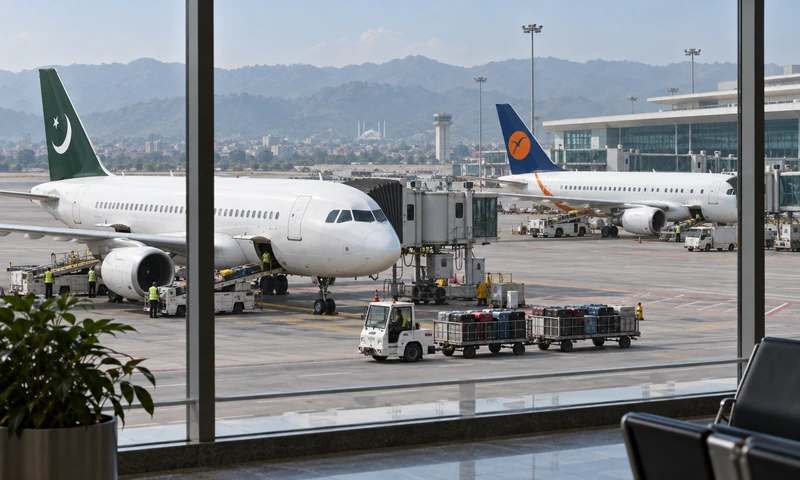
Boeing will share a revised proposal for new aircraft with Pakistan International Airlines as both sides explore earlier deliveries and interim leasing arrangements.
Finance Minister Muhammad Aurangzeb discussed the plans with Boeing Global President Dr Brendan Nelson during his visit for the 81st United Nations General Assembly.
The meeting covered PIA’s fleet modernisation and broader aviation cooperation. Aurangzeb welcomed Boeing’s commitment to revise its proposal and explore ways to accelerate aircraft availability.
Discussions included US Export-Import Bank financing support, engine procurement, spare parts, maintenance and restoring grounded aircraft.
Read More: PIA Passes IATA Safety Audit, Secures Registration Until 2028
Aurangzeb outlined PIA’s privatisation and plans to outsource major airports’ management. He also praised Boeing’s support for aviation safety, regulatory engagement and efforts to restore direct flights to the United States.
The minister highlighted Pakistan’s long-term aviation growth potential.
The talks follow a July meeting between Interior Minister Mohsin Naqvi, PIA’s new management and Boeing in Washington. That discussion covered a proposed acquisition of 16 aircraft, according to Associated Press of Pakistan.
Hepatitis C screening faces delays
Separately, Aurangzeb met a representative of Abbott’s Pharmaceuticals Division to review Pakistan’s Hepatitis C elimination programme and pharmaceutical-sector concerns.
He expressed concern that the programme had used only around 100,000 of approximately three million diagnostic tests procured.
That represents roughly 3.3% of the available tests, highlighting the scale of the implementation shortfall.

Aurangzeb attributed the slow progress to leadership turnover, weak project management and limited public awareness.
He appreciated Abbott’s technical assistance, drawing on its experience supporting Egypt’s large-scale screening programme.
The meeting also addressed the Drug Regulatory Authority of Pakistan’s regulatory capacity and pharmaceutical export diversification. Abbott’s oncology treatment plans and delays in resolving hardship medicine-pricing cases also featured.
Aurangzeb stressed the need to balance affordability, commercial viability and uninterrupted medicine supplies. He committed to raising implementation problems with relevant Pakistani authorities to accelerate progress.
Pakistan presses for faster climate finance
At the UN-hosted “Solutions Dialogue on Climate Finance”, Aurangzeb highlighted Pakistan’s acute climate vulnerability.
He said the government must establish credible adaptation and disaster-response frameworks, early-warning systems and climate strategies. Developing a pipeline of bankable projects also remained essential.
Climate resilience, he said, required domestic macroeconomic stability and adequate fiscal and external buffers. International assistance should complement national resources.
Read More: PIA Adds Three More London Flights as Travel Demand Grows
He outlined a financing strategy combining domestic funding, World Bank assistance and the IMF’s Resilience and Sustainability Facility. Green capital-market instruments and private-investor partnerships also formed part of that approach.
The IMF approved approximately $1.4 billion for Pakistan under the facility in May 2025 to strengthen resilience against climate-related shocks.
Aurangzeb voiced concern over delays in making the Loss and Damage Fund operational.
He urged the Green Climate Fund and other international institutions to simplify accreditation, approval and disbursement procedures. Faster processes would help vulnerable countries access climate financing more efficiently.

























