
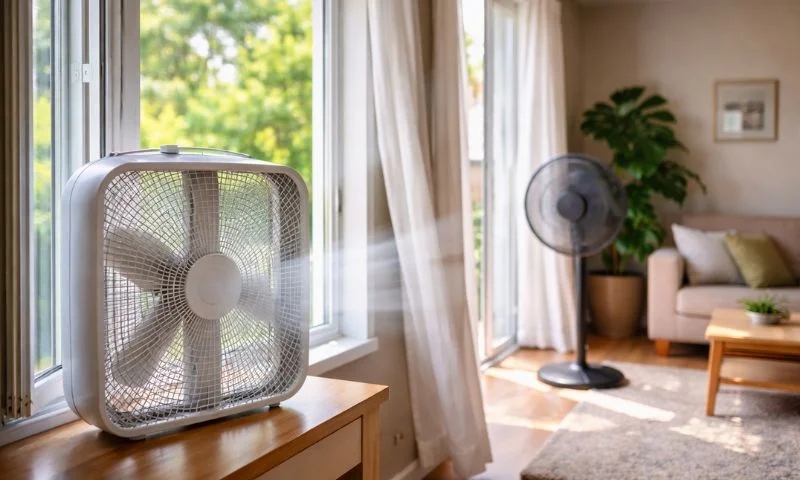
As temperatures climb and energy costs continue to rise, a simple home cooling technique is gaining attention for its effectiveness without relying on air conditioning. The method, based on cross ventilation, uses strategic fan placement to push hot air out of a room while drawing cooler air in.
The approach, highlighted in recent lifestyle coverage, suggests placing a fan facing outward toward an open window to expel warm indoor air, rather than pointing it inward. When paired with a second opening or fan drawing cooler air inside, the setup creates a continuous airflow that can significantly reduce indoor heat buildup.
How the hack works
The concept is rooted in basic airflow physics. Cross ventilation occurs when air enters through one opening and exits through another, creating a current across a space.
Experts say this natural airflow works by exploiting pressure differences between the inside and outside of a room. As hot air is pushed out, cooler air is pulled in, creating a steady circulation that improves comfort and reduces temperature.
In practical terms, the hack involves opening windows or doors on opposite sides of a room or home. A fan placed near one opening should face outward to act like an exhaust, while another fan or opening on the opposite side allows cooler air to enter.
According to widely shared advice, this method works best when the air outside is cooler than inside, typically during early morning or evening hours.
More than just blowing air
While many people use fans to cool themselves directly, experts note that fans alone do not lower room temperature. Instead, they create a wind-chill effect on the skin.
The outward-facing fan technique changes this by actively removing trapped heat from the room. Some experts describe it as creating “negative pressure,” where warm air is forced out and replaced with fresher, cooler air.
Research also suggests that wind-driven ventilation can increase airflow rates by up to 40 percent compared with temperature-driven ventilation alone, making it a powerful passive cooling strategy.
When and how to use it
Timing plays a critical role in the effectiveness of the method. Opening windows during the hottest part of the day can allow more heat to enter, reducing the cooling effect. Instead, experts recommend keeping windows closed during peak sunlight hours and using cross ventilation when outdoor temperatures drop.
The setup also depends on room layout. Spaces with openings on opposite sides allow stronger airflow, while clutter or blocked pathways can reduce effectiveness. Even in smaller homes, combining doors, windows and fans can create a noticeable difference in comfort.
A low-cost solution gaining popularity
With rising electricity costs and limited access to air conditioning in many regions, the cross-ventilation hack has gained popularity as a practical and energy-efficient alternative.
Home cooling strategies based on natural airflow are increasingly being promoted as sustainable solutions that reduce reliance on power-intensive systems.
While not a replacement for air conditioning in extreme heat, the method offers a simple way to improve indoor comfort using minimal resources.
As summer temperatures continue to test households worldwide, such low-cost techniques are becoming essential tools for staying cool without driving up energy bills.