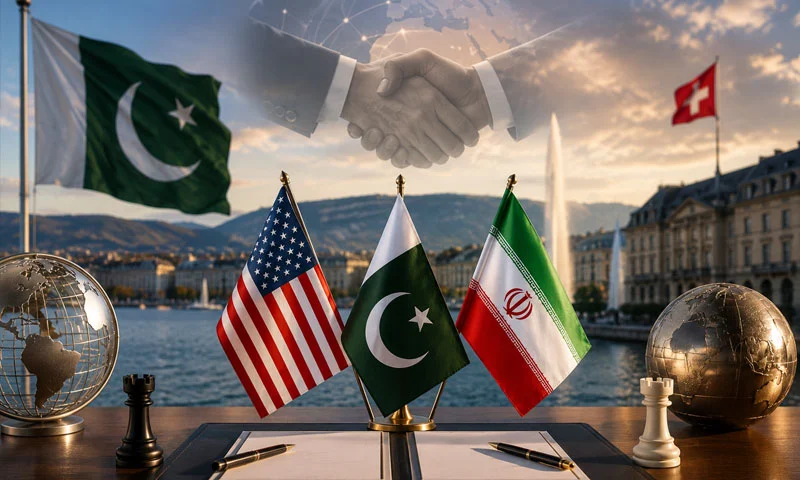
Prime Minister Shehbaz Sharif announced on Monday that Pakistan will host the signing ceremony of a landmark agreement between the United States and Iran aimed at ending a conflict that has destabilised the Middle East for nearly three months.
Addressing the National Assembly, the prime minister said the ceremony would take place in Geneva, Switzerland, on June 19, marking what he described as a major diplomatic achievement for regional peace.
“The [signing] ceremony of this historic agreement will be held on Friday, June 19, in Geneva, and by the grace of God, it will be hosted by Pakistan,” Shehbaz told lawmakers.
The announcement came hours after he revealed that Washington and Tehran had agreed on a framework designed to end hostilities, reopen critical trade routes and create conditions for broader negotiations.
Under the agreement, both sides have agreed to halt military operations and move toward a structured peace process. The framework also includes the lifting of the US blockade on Iran and the reopening of the Strait of Hormuz, one of the world’s most important energy shipping corridors.
The conflict began in late February when the United States and Israel launched strikes on Iran. The confrontation quickly expanded across the region and triggered concerns about energy supplies, regional stability and global economic growth.
Pakistan’s Mediation Role Gains International Recognition
Pakistan played an active role throughout the crisis and emerged as one of the key facilitators of dialogue between Washington and Tehran.
Islamabad hosted the first round of direct talks between the two sides in April, bringing negotiators together at a time when diplomatic efforts had largely stalled.
The prime minister said Pakistan remained committed to promoting dialogue and peaceful solutions during the conflict.
Diplomatic sources have described the upcoming Geneva ceremony as the culmination of months of intensive negotiations involving regional and international stakeholders.
Earlier, Shehbaz thanked Qatar, Saudi Arabia and Turkiye for supporting mediation efforts and helping create momentum for an agreement.
Qatar’s leadership also welcomed the breakthrough and expressed hope that future negotiations would proceed in a constructive manner.
Strait of Hormuz Reopening Seen as Major Economic Relief
The agreement carries significant economic implications because it includes plans to restore navigation through the Strait of Hormuz.
The strategic waterway handles a substantial share of global oil shipments and has faced severe disruptions during the conflict.
Analysts believe reopening the route could help stabilise energy markets and ease concerns about global supply chains.
Iranian officials have indicated that broader discussions will continue during an initial ceasefire period. Those talks are expected to address sanctions relief, regional security issues and the future of Iran’s nuclear programme.
Although challenges remain, diplomats view the agreement as the most significant step toward regional de-escalation since the conflict erupted earlier this year.
For Pakistan, hosting the signing ceremony represents a rare diplomatic milestone and highlights Islamabad’s growing role in regional conflict resolution and international mediation efforts.