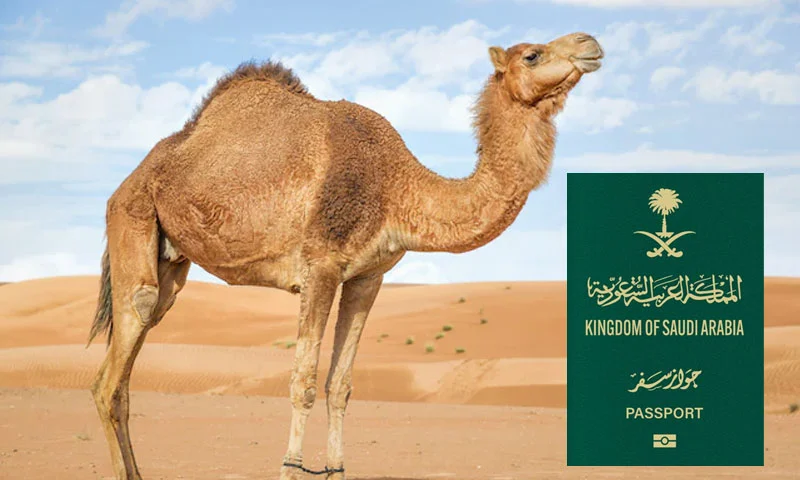
Saudi Arabia has announced an unusual yet strategic initiative: it will begin issuing official passports for the kingdom’s millions of camels as part of efforts to strengthen regulation, protect ownership rights and modernise camel management practices. The move highlights the economic, cultural and ecological significance of camels in the Kingdom.
The initiative was unveiled by the Ministry of Environment, Water and Agriculture, which said the passport scheme aims to build a centralised, reliable database to track camel ownership, sales, transport and health information across the country. The passports will carry detailed information about each animal — including a microchip number, passport number, name, breed, sex, colour, place of birth, date of issuance, and even verified veterinary records.
A Tradition Embedded in Modern Framework
Camels are deeply woven into the cultural and economic fabric of Saudi Arabia. Historically, they served as essential transport animals across desert landscapes and remain emblematic of Bedouin heritage. Today, they play a prominent role in the breeding industry and carry significant value in annual events such as the Mazayen al-Ibl (King Abdul Aziz Camel Festival), where prized animals can sell for hundreds of thousands of dollars and attract breeders from across the Gulf region.
With an estimated 2.2 million camels in the kingdom as of 2024, and roughly 80,000 camel owners, authorities see the passport project as a tool to enhance productivity, transparency and market credibility. Officials believe that formal documentation will help regulate the sector and ensure accurate proof of ownership, which has historically relied on informal or oral records.
Tackling Challenges and Strengthening Oversight
In recent years, camel breeding and beauty contests have grown into major spectacles that combine cultural pride with commercial gain. However, this growth also brought challenges. Some competitors have used dubious cosmetic enhancements — such as injections and fillers — to artificially alter the appearance of show camels, practices that authorities have moved to ban in pursuit of preserving natural and fair competition.
The passport system is part of a broader governance push designed to manage the sector more efficiently and ethically. By linking electronic identification with essential health and regulatory data, authorities hope to bolster the integrity of trading processes and protect owners from fraud or disputes.
Implications for the Industry and Beyond
Experts see the camel passport project as a qualitative step toward digitising and modernising livestock management in the Gulf. For breeders and traders, a centralised system could streamline transactions, strengthen market trust and create a foundation for future services — including health monitoring and international trade facilitation.
Globally, the initiative illustrates how traditional industries can be brought into formal regulatory frameworks without diminishing heritage value. As Saudi Arabia continues to transform its economy under Vision 2030 goals, such projects offer a unique blend of tradition and technology that respects cultural legacy while improving transparency and governance.