
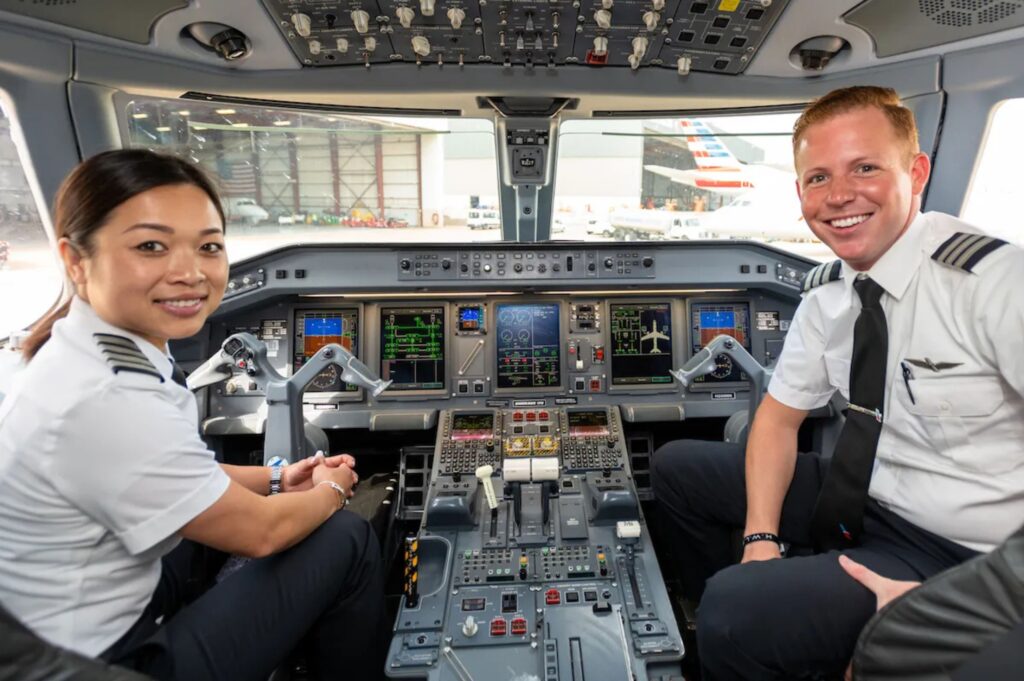
A viral paystub from an American Airlines pilot has shocked the internet and sparked wide discussion about how much airline pilots actually earn especially at major U.S. carriers. A captain based in Miami flying the Boeing 737 shared their year-to-date earnings online, revealing a total compensation of nearly $458,000 for 2025, with an hourly flight pay rate above $360. The post quickly spread across social media and aviation forums, surprising many people who had no idea pilots could earn such figures.
Pilot pay in the airline industry is structured differently than a typical salary, with most compensation tied to actual hours flown under federal regulations. U.S. pilots are generally capped at around 900–1,000 flight hours per year, meaning even with high hourly rates, total work time is limited making the nearly half-million-dollar figure impressive. In addition to base pay, pilots receive incentive pay, vacation pay, training and per diem allowances, which can meaningfully increase total earnings.
The viral case isn’t necessarily the norm for all American Airlines pilots, but it highlights how lucrative the profession can be for seasoned captains on major aircraft. Salary data shows that first officers (co-pilots) at American Airlines typically start lower, with some estimates placing their pay from around $110,000 to $230,000 annually depending on experience and hours flown. Captains on larger jets, especially wide-body aircraft like the Boeing 777, have even higher earning potential.
According to labor statistics and salary surveys, airline pilots in the U.S. have median annual earnings of about $226,600, though union contracts and company benefits can push total compensation significantly higher at major carriers, sometimes exceeding $500,000 for long-tenured captains with profit sharing and bonuses factored in.
Public reaction to the pilot pay reveal has been mixed. Some commenters praised the high earnings as justified for a job that involves immense responsibility and rigorous training, while others argued that the scheduling demands, irregular hours and constant travel make the profession less appealing despite the pay. The debate also underscored a broader issue in aviation: pilot shortages and competitive hiring have driven up salaries industry-wide, as airlines strive to recruit and retain experienced flight crews.
For aspiring aviators, this moment has drawn attention to a career path that offers increasing financial rewards as pilots gain seniority and, for passengers, a new data point on the professionals who safely guide flights around the globe.