The International Cricket Council (ICC) has launched new guidelines aimed at helping female cricketers return to elite-level competition after pregnancy, marking a significant step toward improving support for mothers in the sport.
The ICC unveiled the “Return to Play Post-Pregnancy Guidelines” on Monday during a rest day at the Women’s T20 World Cup in England.
The framework provides practical guidance for players, national boards, coaches and medical staff. It aims to ensure that motherhood no longer forces women to choose between family life and international cricket.
ICC officials said the guidelines will help member nations develop their own maternity and return-to-play policies while complying with local laws and regulations.
ICC Wants Motherhood and Cricket to Coexist
Dr Philippa Inge, Australia’s team doctor and a member of the ICC Medical Advisory Committee, led the drafting of the guidelines.
She said the initiative sends a clear message to female athletes.
“What we’re aiming to do with this policy is allow Member nations to facilitate the return to cricket for their players,” Dr Inge said.
“We know that many Members haven’t necessarily had these in the past, and the aim has been to make them adaptable for the unique environments in which our Members need to use them.”
She added that the guidelines were “designed to show players that having a baby doesn’t need to be the end of their career”.
The ICC said the women’s game has become increasingly professional in recent years. As a result, more players are choosing to start families during their careers and then return to international cricket.
Several countries already have maternity policies in place. However, the governing body believes a global framework will help create more consistent standards across the sport.
The guidelines cover physical recovery, mental wellbeing, medical reviews and gradual reintegration into training and competition.
Inspired by Players Who Returned After Motherhood
The framework draws on experiences of players who successfully resumed international careers after childbirth.
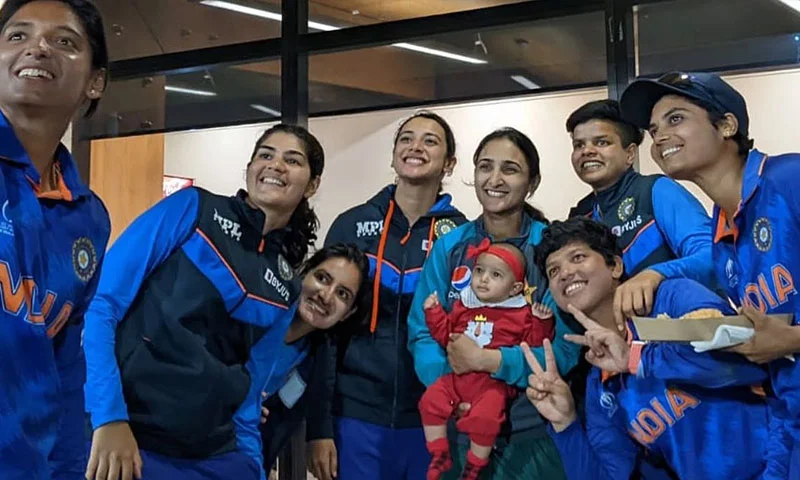
Former Pakistan captain Bismah Maroof became one of the most recognisable examples. She returned to international cricket after giving birth and travelled with her daughter Fatima during the 2022 Women’s World Cup.
The image of India’s players posing with Bismah and her baby became one of the tournament’s defining moments.
West Indies leg-spinner Afy Fletcher also returned to top-level cricket after giving birth to her son in 2021. The 39-year-old is currently representing her country at the Women’s T20 World Cup.
Fletcher welcomed the ICC’s decision.
“Physical recovery was challenging but, more than that, I struggled to leave my child and miss creating precious moments,” she said.
“That’s why every moment I play on the field is driven by him. Every player’s journey is different, but you have to have strong support, get healthy and trust the process.”
New Zealand’s Amy Satterthwaite returned to international cricket after maternity leave before retiring in 2022.
Former New Zealand batter Lauren Down also resumed her career after becoming a mother and later retired earlier this year.
South African fast bowler Masabata Klaas has spent most of her international career balancing cricket with motherhood.
India’s Sneha Deepthi was already a mother when Delhi Capitals selected her for the inaugural Women’s Premier League in 2023.
The ICC framework follows a model known as the “6 Rs”: Ready, Review, Restore, Recondition, Return and Refine.
The process guides players from early recovery after childbirth to full international competition.
The recommendations also encourage flexible training schedules, childcare support, access to feeding facilities at venues and travel assistance where possible.
Cricket administrators hope the guidelines will create a more inclusive environment and help talented players extend their careers without sacrificing family life.
For many women in cricket, the ICC’s latest move could remove one of the biggest barriers to remaining in the game after becoming mothers.