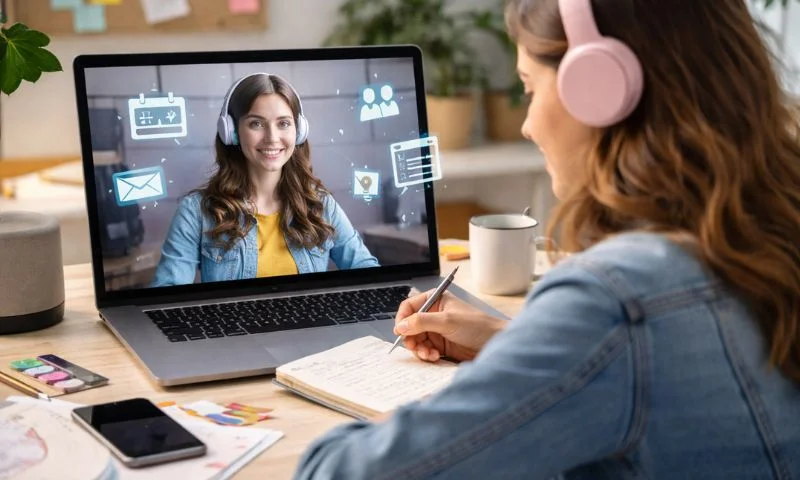
A growing number of tech developers and researchers are exploring the use of so-called “digital twins” to support people with attention deficit hyperactivity disorder, raising both optimism and concern about the future of workplace productivity tools.
The concept, highlighted in a recent BBC report, involves creating an AI-powered digital version of a person that can mirror their behaviour, organise tasks, and even respond to emails or manage schedules in a way that reflects how the individual thinks and works.
In one example cited, a digital twin was trained using emails, messages and meeting data to replicate its user’s communication style and decision-making patterns. The system could then assist with day-to-day tasks, helping to manage workload and reduce cognitive strain.
A tool for managing overload
Experts say the technology could be particularly useful for people with ADHD, who often struggle with executive function tasks such as planning, organisation and time management.
By offloading routine decisions and reminders to a digital assistant, users may be able to focus more effectively on complex or creative work. Supporters argue that such systems could act as an “external brain,” helping individuals stay on track in environments that demand constant attention switching.
The idea aligns with broader research showing that digital tools, including reminders and structured workflows, can significantly improve productivity for people with ADHD.
Read More: Tired of Repeating Prompts? Google Just Made AI Way Easier to Use in Chrome
Ethical and practical concerns
However, the concept has also raised questions about privacy, data ownership and over-reliance on technology.
Because digital twins rely on large amounts of personal data, including communications and behavioural patterns, critics warn that sensitive information could be exposed or misused.
Some experts also caution that excessive dependence on AI tools may weaken cognitive skills over time, particularly in individuals already facing challenges with attention and organisation.
There are also concerns about accuracy. While digital twins can mimic communication styles, they do not truly “think” or understand context in the same way humans do, raising the risk of errors in decision-making or misrepresentation.
A broader shift in workplace technology
The development of digital twins reflects a wider trend in the use of artificial intelligence to personalise work environments. Originally used in industries such as manufacturing and engineering, where virtual models simulate physical systems, digital twin technology is now being adapted for individual users.
Researchers describe digital twins as systems that integrate data, machine learning and behavioural modelling to create a dynamic digital representation of real-world processes. Their expansion into personal productivity marks a significant shift toward human-centred AI tools.
Read More: Google, Pakistan Team Up for AI Programme with Rs2.5 Million Reward
Promise balanced by caution
While the technology is still in early stages, interest is growing among startups and major tech firms alike. Advocates believe digital twins could reduce workplace stress and unlock productivity, particularly for neurodivergent individuals.
At the same time, experts stress that such tools should complement, not replace, human skills.
For now, digital twins remain an emerging concept, offering a glimpse into how artificial intelligence could reshape how people work, think and manage their daily lives.